

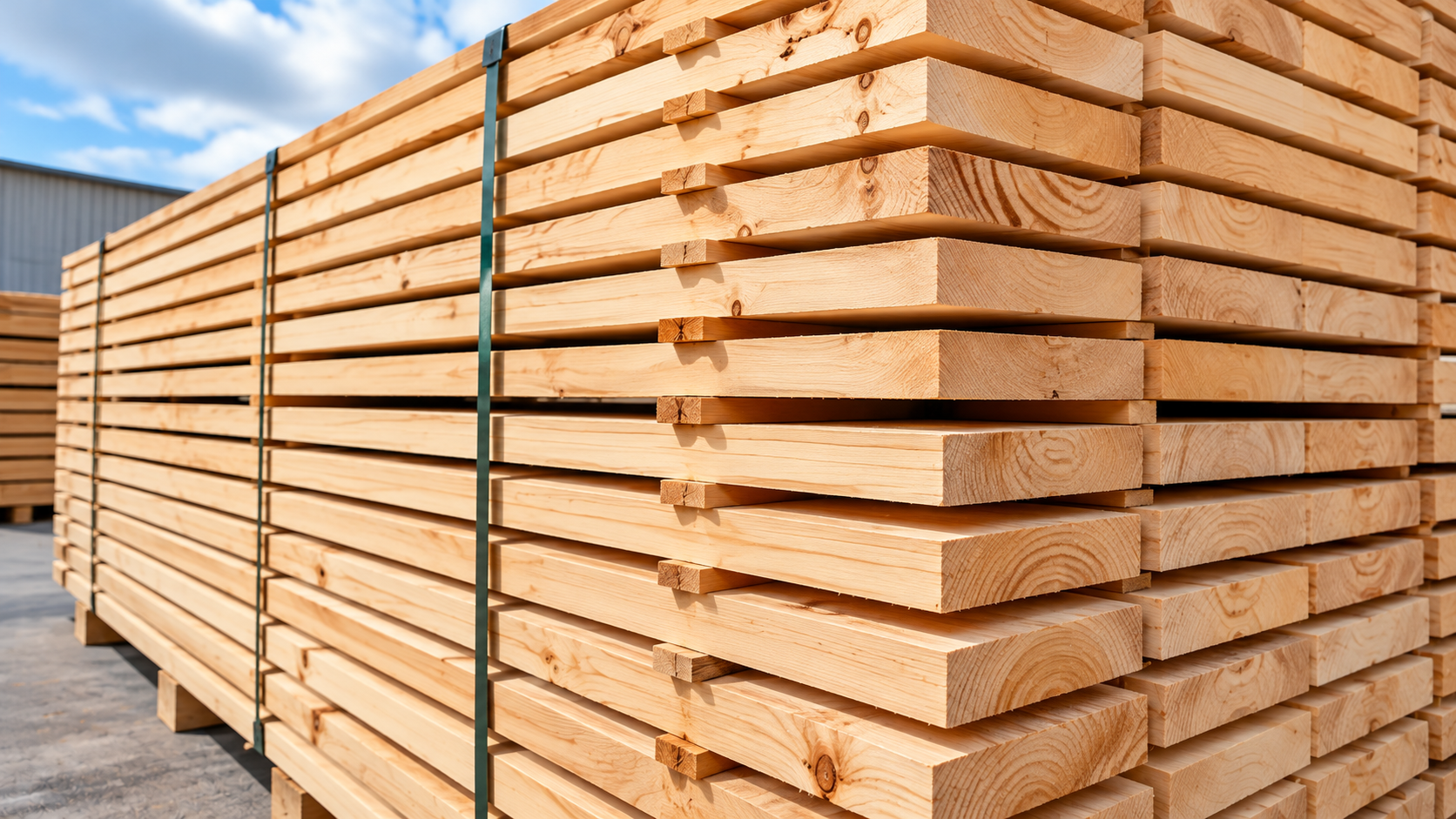
Choosing the right pine timber supplier in India is an important decision for businesses involved in pallet manufacturing, wooden packaging, industrial crating, construction, and furniture production. The quality, dimensions, moisture content, and consistency of timber can directly influence manufacturing efficiency, material wastage, and the suitability of the finished product.
For businesses purchasing timber in bulk, selecting a supplier involves more than comparing prices. Buyers should evaluate product specifications, timber species, sourcing options, quality documentation, delivery requirements, and the supplier’s ability to understand their commercial needs.
In this guide, we explain the key factors to consider when sourcing pine timber for industrial and commercial applications.
Why Is Pine Timber Used in Industrial Applications?
Pine is a softwood commonly used across several commercial industries because it can be processed into different sizes and specifications for a variety of applications.
Depending on the species, grade, dimensions, and intended use, pine timber may be suitable for:
- Wooden pallet manufacturing
- Industrial crates and packing cases
- Wooden packaging and shipping materials
- General construction and carpentry
- Furniture components and joinery
- Other manufacturing applications requiring suitable softwood timber
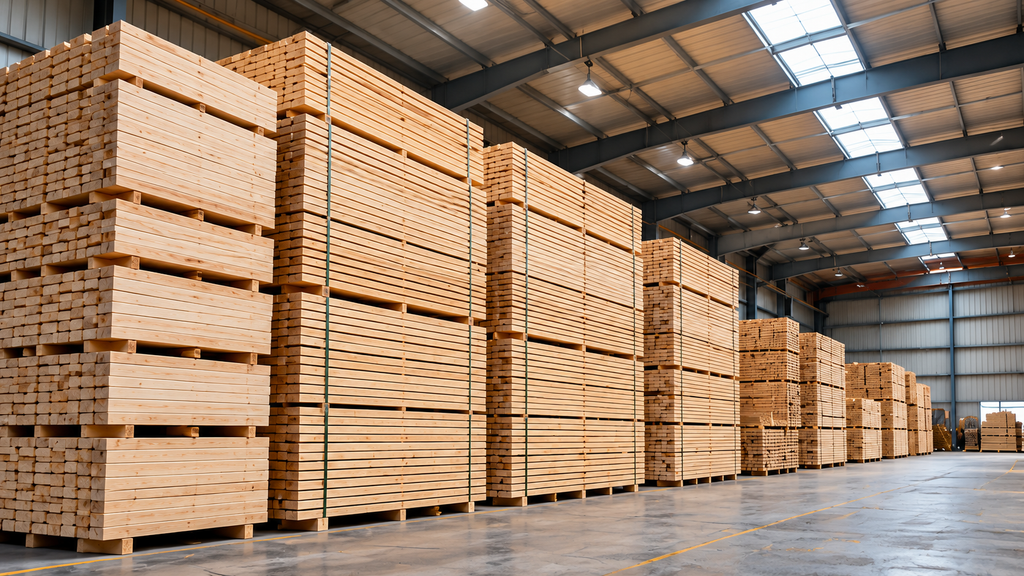
The right choice depends on the load requirements, working environment, manufacturing process, and applicable industry standards. Buyers should always confirm that the selected timber is suitable for their intended application.
1. Understand Your Timber Requirements
Before contacting a pine timber supplier, prepare a clear specification for the material your business needs. This makes quotations easier to compare and helps reduce misunderstandings during procurement.
Important details to consider include:
Timber species: Identify whether you require a particular pine species, Spruce, or another softwood.
Dimensions: Specify the required thickness, width, length, and acceptable dimensional tolerances.
Moisture content: Determine whether kiln-dried timber or another moisture specification is appropriate for your application.
Grade and appearance: Explain your requirements for knots, splits, defects, straightness, and other relevant grading characteristics.
Processing requirements: Clarify whether you need rough-sawn timber, planed timber, or material prepared to particular dimensions.
Order quantity: Share your estimated volume, purchasing frequency, and preferred delivery schedule.
A detailed specification allows a timber supplier to assess your requirements more accurately and provide a more meaningful quotation.
2. Understand Kiln-Dried Pine Timber
Kiln-dried timber, commonly abbreviated as KD timber, is dried in a controlled environment to reduce its moisture content to a specified level.
The appropriate moisture content depends on the timber species, product dimensions, intended use, storage conditions, and applicable requirements.
Businesses considering a KD pine timber supplier should ask about:
- The specified moisture content and applicable tolerances
- Whether moisture testing or supporting documentation is available
- Timber dimensions and grading requirements
- Storage and packaging arrangements
- Protection against moisture exposure during transportation and storage
Kiln drying can improve dimensional stability when the timber is dried appropriately for its intended use. However, the timber can absorb moisture again if it is exposed to unsuitable storage or transportation conditions.
For pallet manufacturers and wooden packaging companies, confirming the correct moisture specification before placing an order is an important procurement step.
3. Choose the Right Timber Species
Different timber species have different physical characteristics, and their suitability depends on the application and required specifications.
Pine Timber
Pine timber is used in a range of industrial and commercial applications, including pallets, packaging, construction, and selected furniture components. Buyers should confirm the exact species, grade, dimensions, and performance requirements before purchasing.
Brazilian Pine Timber
Businesses sourcing Brazilian Pine Timber should confirm the exact commercial and botanical species being offered, its country of origin, and the applicable product specifications.
The name used in a quotation should clearly identify the material being supplied, especially when comparing products from different sourcing regions.
Southern Yellow Pine
Southern Yellow Pine is a group of pine species used in applications where their particular strength and processing characteristics may be suitable. Buyers should evaluate the required grade, dimensions, moisture content, and intended load or structural application.
Spruce Timber
Spruce is another softwood option used in selected construction, packaging, and manufacturing applications. Suitability depends on the species, grade, dimensions, and requirements of the finished product.
When comparing timber products, buyers should assess specifications and intended use rather than relying on the species name alone.
4. Evaluate a Timber Supplier Before Purchasing
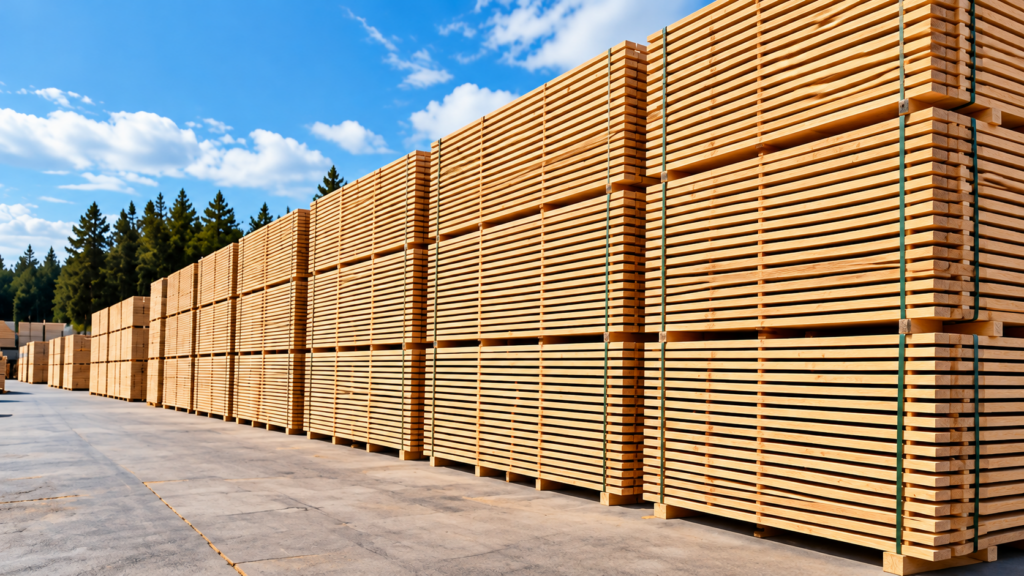
Choosing a reliable timber supplier in India requires careful evaluation of several commercial and technical factors.
Product specifications: Check whether the supplier can clearly explain the species, dimensions, grade, and moisture requirements of the offered timber.
Sourcing information: Ask about the product’s origin and whether relevant supporting documentation is available.
Quality consistency: Discuss inspection procedures, acceptance criteria, and how product variations are handled.
Commercial terms: Confirm pricing basis, order quantities, payment terms, taxes, transportation costs, and quotation validity.
Delivery planning: Establish the expected lead time, packaging arrangements, shipment details, and process for communicating delays.
Documentation: Depending on the transaction, request applicable invoices, packing lists, origin documents, inspection records, and other required import or trade documentation.
For international timber purchases, buyers should also clarify applicable import requirements, customs procedures, and any relevant phytosanitary or wood-treatment requirements for the product and destination.
Taking these steps before confirming an order helps businesses make informed procurement decisions.
5. Consider the Needs of Pallet and Wooden Packaging Manufacturers
Pallet manufacturers and wooden packaging companies often purchase timber according to specific dimensions, production volumes, and end-use requirements.
For these businesses, the procurement process should consider:
- Consistent board dimensions for repeat production
- Timber grades appropriate to the intended application
- Moisture specifications suitable for the manufacturing process
- Nail-holding and other relevant performance characteristics
- Material wastage during cutting and machining
- Storage conditions and stock management
- Compliance requirements for export packaging, where applicable
For export wooden packaging, buyers should confirm whether ISPM 15 requirements apply to their packaging and destination. Where required, the packaging must comply with the applicable treatment, marking, and other regulatory requirements.
A timber product should not be assumed to meet these requirements simply because it is kiln-dried. The buyer should verify the relevant compliance requirements for the finished packaging.
6. Compare Timber Prices on a Like-for-Like Basis
Price is an important factor in timber procurement, but the lowest quotation does not always represent the best overall value.
When comparing quotations from wholesale timber suppliers, check whether they cover the same specifications.
Compare:
- Species and country of origin
- Grade and timber dimensions
- Moisture content and drying specifications
- Price unit and measurement method
- Order quantity and minimum order requirements
- Freight, insurance, handling, and other applicable charges
- Taxes, import duties, and customs-related costs where relevant
- Delivery timelines and payment terms
For imported timber, the total landed cost may be more useful than the initial quoted price. Buyers should compare all relevant charges and the quality specifications before making a purchasing decision.
A clear comparison helps businesses evaluate quotations fairly and plan procurement budgets more accurately.
7. Why International Timber Sourcing Matters
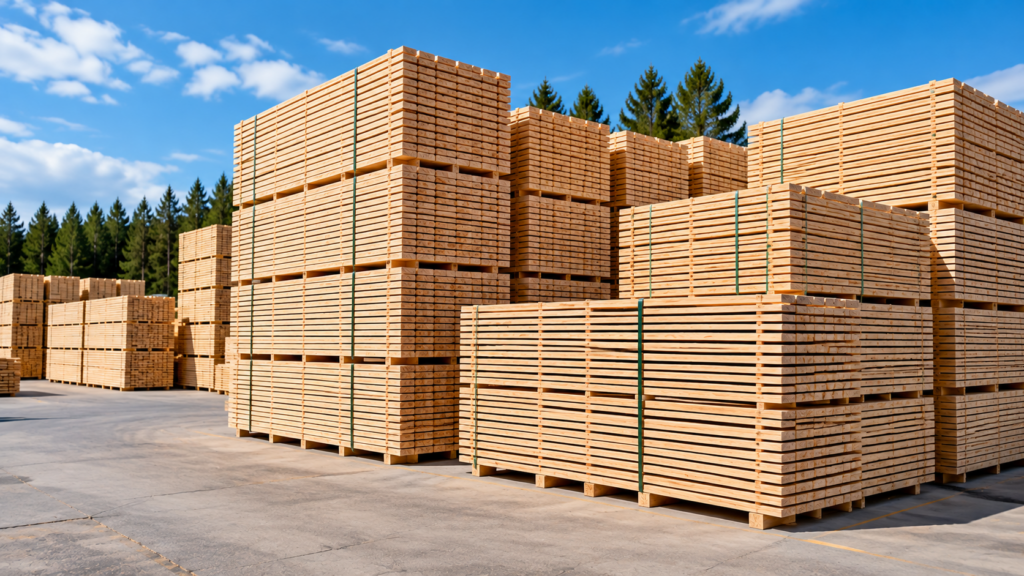
International timber sourcing can give businesses access to product options from different timber-producing regions. However, the suitability and availability of a particular product depend on its species, grade, specifications, sourcing arrangements, and applicable trade requirements.
Businesses exploring imported pine timber should clarify:
- Which timber species and dimensions are available
- The country of origin and supporting documentation
- The required order volume
- Applicable shipping and delivery arrangements
- Quality inspection and acceptance procedures
- Import documentation and compliance requirements
Clear communication between the buyer and supplier is especially important when the timber is being sourced across international markets.
A well-defined sourcing process helps buyers understand what is being offered and what to expect before committing to a purchase.
8. Questions to Ask Before Placing a Bulk Timber Order
Before selecting a timber supplier, consider asking the following questions:
- Which exact timber species and grades are available?
- What dimensions and moisture specifications can be supplied?
- What is the minimum order quantity?
- Can the supplier provide relevant product and origin documentation?
- How is product quality checked before dispatch?
- What are the quotation validity, payment terms, and delivery estimates?
- Which transportation, insurance, and import costs are included?
- What process is followed if the delivered material does not match the agreed specifications?
These questions help establish clear expectations and support better communication throughout the procurement process.
Finding a Timber Sourcing Partner for Your Business
Selecting the right pine timber supplier in India requires attention to product specifications, quality expectations, commercial terms, and delivery arrangements. Whether you are purchasing timber for pallets, wooden packaging, industrial crates, construction, or other manufacturing applications, a clearly defined specification is the starting point for a successful procurement process.
Noora International LLP focuses on timber sourcing and supply for business customers. Buyers exploring KD Pine, Brazilian Pine Timber, Southern Yellow Pine, Spruce, and other suitable timber options can contact the company to discuss their product requirements and sourcing needs.
When requesting a quotation, share your preferred species, dimensions, grade, moisture specifications, required quantity, destination, and expected delivery schedule. Providing these details helps establish a clearer basis for discussing suitable timber options.
Contact Noora International LLP to discuss your timber sourcing requirements and explore suitable options for your business.
Product availability, specifications, sourcing origins, and commercial terms should be confirmed directly with the supplier before placing an order.